Monthly Archives: March 2013

The Tell Tale Signs Of Mice

Uninvited guests are a nightmare, especially when those guests are disease carrying, smelly rodents with a penchant for working their way through your food and rubbish and leaving a trail of destruction. Here are the tell tale signs that mice have been in your home.

Odor

A strong smell of ammonia, almost musky will follow the mice as they mark their pathways and territories with urine. Cats and dogs are likely to notice the odor before you do and will express this through excitement where the mice are most active. If you see them take interest in particular cupboards or skirting boards then take a closer look for the other signs of an infestation.  It could just be that there is a rogue toy or treat that had previously gone unnoticed, however if there are other signs then you have mice. Such is there habit of urinating you may notice yellow trails building up along their trails.

Droppings

Mice pellets are around 5 mm in length and dark in color  where you suspect the mice have been there will be a number of them.  Check under the sink, in the dark corners underneath and inside drawers and around food containers and rubbish bags.

Scratching & Squeaking

Mice are noisy creatures and due to their poor eyesight and danger from predators they will move around the crevices and pathways around your walls and cupboards. They are nocturnal creatures so you will be able to hear their high pitched squeaking and the scurrying and scratching noises of their paws in the silence of the night.

Gnawing

Bite marks, or more accurately little nibble marks where they have happily gnawed through food packaging, wood, plastic or even cables. Mice have teeth that are always growing so will chew through most hard surfaces to relieve this. If you fear you have mice ensure food packets that have been opened are re-sealed and kept in air-tight containers .Food debris such as bread crumbs or cereal, or food left out is what attracts them in the first place. Ensure that food waste is put in a rubbish bin that is routinely emptied or has a strong lid.

Finally you may see a mouse, in which case it is likely there will be more nearby. Mice are quite small in size and of a light brown or grey color with a thin tail. They also have soft skeletons that allow them to fit through spaces just quarter of an inch thick making gaps in floorboards and cupboards ideal.

Featured images:

Thanks to James from Terminex pest control in London for writing this post.

Houston Residents Battling Fire Ants

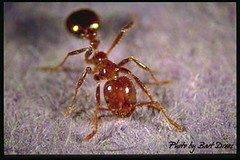
fire_ant_worker1

fire_ant_worker1 (Photo credit: bart_drees)

If you live anywhere in the Houston, TX area you have likely had an unfortunate encounter with the Red Imported Fire ant. These ants have the reputation of being one of the worst pests in Texas, and rightfully so. In terms of human health, property damage, and environmental damage; no other pest can match the malevolence of these property pests… And Houston residents know it!

Houston Fire Ants

Residents of Houston, and surrounding areas, have been battling Red Imported Fire ants since their arrival in the late 1930’s. Their population has spread tremendously; so much in fact that certain areas in Texas have reported some 200 Fire Ant mounds per acre. That’s a scary thought considering one fire ant mount can house more than 250,000 ants a piece.

Another scary thought is that stings from these ants have been responsible for some 100+ deaths. Most of these deaths occur when someone who is stung has insect allergies. Painful fire ant stings can send a victim into anaphylactic shock. A sting victim will experience pain, swelling, itching, redness, dizziness, disorientation, and vomiting.

As you can imagine, these ants can create a major pest control problem for homeowners and local residents. Bulwark Pest Control technicians report that Fire Ants are one of the most frequently called about pests in the Houston, Texas area.

The Impact Of Fire Ants In Texas

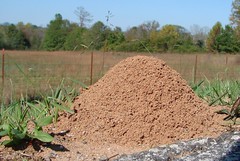
Fire ant nest

Fire ant nest (Photo credit: Martin LaBar (going on hiatus))

If their stings weren’t serious enough, Fire Ants can also cause severe property and agricultural damage. Fire Ant mounds can measure several feet in diameter and reach eight feet deep into the soil. This building activity has damaged plant roots, lead to the loss of crops, and interfered with agricultural cultivation.

On top of it all, Red Imported Fire ants are also attracted to electrical wiring and equipment. They are known for creeping into the electrical wiring of stop lights and shorting them out. This activity is the leading cause of traffic light malfunctions in Texas.

In the state of Texas, Red Imported Fire ants cause more than $140 million in damage each year.

The FDA estimates more than $5 billion is spent annually on medical treatment, damage, and control in Fire Ant infested areas.

Ant Control For Fire Ants

Red Imported Fire ant infestations are very challenging to completely eliminate. A one time treatment from an exterminator, or a do-it-yourself pest control method, will only break up the ants into smaller colonies as they wait out the effects of the pesticide. Controlling Fire Ant populations takes consistent effort, and ant control strategies, from a professional who has experience in treating these malevolent insects.

Houston Ant Control

Bulwark Exterminating
10900 Brittmoore Park Drive
Houston, TX 77041
(281) 668-4930
bulwarkpestcontrol.com
 
AAAnimal Pro: Wildlife Control
8280 Golf Green Circle
Houston, TX 77036
(832) 248- 7804
houstonwildlifepatrol.com
 
Terminix
16155 Park Row, Suite 190
Houston, TX 77084
(832) 460-3698
terminix.com

Watch Out! Harmful Bugs That Can Kill Plants Around Your Region

The Japanese beetle adult--an attractive pest....

If you’ve been a frequent reader of our blog, then you already know how passionate we are about topic pertaining to gardening and landscaping – including ways of keeping plants healthy and beautiful. Yet, it’s not surprising that Northern hemisphere gardening has its own unique set of challenges, including plant-destroying bugs. While we are lucky enough to avoid many of the year-round pests that attack other regions of the nation, we are certainly not immune to them.

Here are some of the harmful bugs that may find their way into your gardening adventures this year. (The good news is you can prevent them!) Watch out for these plant munching pests.

Japanese Beetles Still making their presence known in the United States and Canada, the common Japanese beetle can wreak havoc on your garden if you don’t knock them out fast. Easily distinguishable by their well-known iridescent greenish-gold appearance, you may start to notice these pests early in the growing season. They love to eat roses, raspberries, geraniums, and many other varieties of flowering plants. To treat for them without harming your plants, spritz a solution of 1 teaspoon dish detergent in water onto plants each day, and squash any bugs or larva you see hanging out. The good news is that Japanese Beetles have a relatively short lifespan of only about 6-8 weeks.

Emerald Ash Borer The stately ash tree is something to treasure in the North, yet an insidious pest often comes to visit. The Emerald Ash Borer is one such pest you want to watch out for. Native to Asia, the larvae Emerald Ash Borer does one thing very well – boring holes into the bark of ash trees and destroying them from the inside out. Noted for its dark-metallic emerald green color, this bullet shaped beetle can grow to .33 inches long and has a flat head with black eyes. Annual soil treatments that include the components Imidicloprid or Dinotefuran can effective reduce their presence.

English: Agrilus planipennis, the emerald ash ...

Cutworms A devastating pest that you don’t want to get on your plants or trees is that of the cutworm. While there are many varieties, the one that is most prevalent is the variegated cutworm, identified by its brown and yellowish variegated coloration with diamond shaped spots on the top of its body. Cutworms chew on every piece of foliage they can find, cutting them down from the root upward. To get rid of them, keep soil well-cultivated and make it harder for larvae to get to your delicate plants by adding use coffee grounds around each planting.

Tent Caterpillars A common pest found in the Northern territories, tent caterpillars are famous for their huge tent-like nests found in the branches of trees. The caterpillar itself has either a blue or black body with white or yellow stripes down the back. They are voracious, defoliating trees in a matter of days. To help prevent them, wrap the base of each tree with plastic sheeting (garbage bags work well) 12 inches from the ground and then layer a thick strip of petroleum jelly. Remove all nests as soon as you notice them on your trees or buildings.

Preventing pests are part of gardening and landscape management, but they do not have to get the best of you. Keeping a close eye on your plants, trees, and property can help you to maintain a healthy and beautiful garden in the North.

About  the Author: Stephanie writes about landscaping and exterior design. She reviews landscaping sites, click here for more information. When she’s not working she catches butterflies with her 2 daughters.